
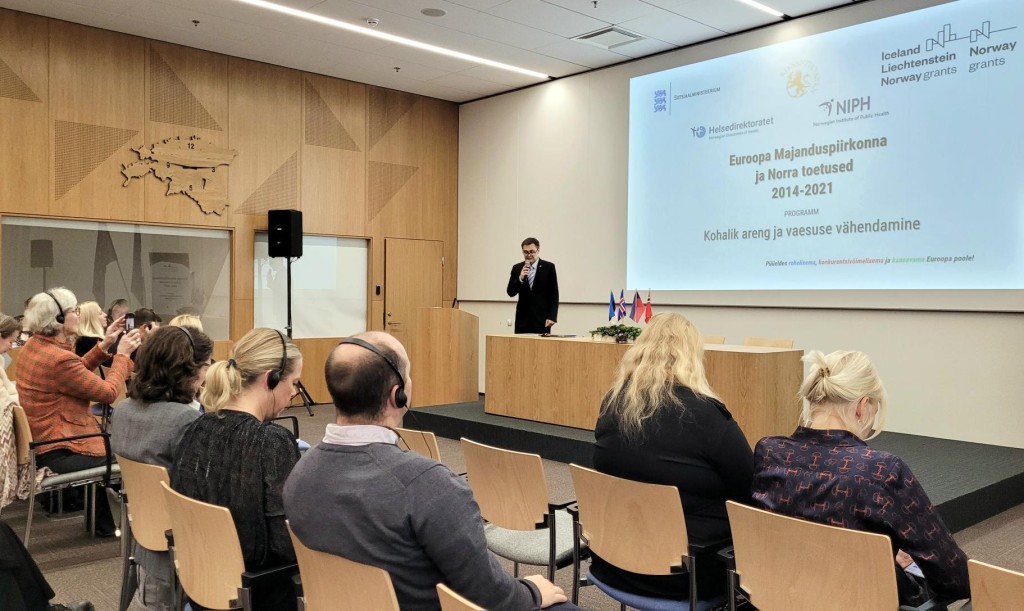
“With the support of the program, numerous significant initiatives were implemented to support children’s well-being, public health, and to prevent domestic violence,” said Hanna Vseviov, Deputy Secretary General for Social Policy. “For example, the program provided a foundation for the development of a national family mediation system, helping separated families reach essential agreements regarding child care. Over 1,100 families have used this service to date."
The program helped establish restorative justice and family mediation models in Estonia to support parents and enhance children’s sense of security. Additionally, mental health and injury prevention projects were funded, including a model for midwife home visits to identify at-risk families early on. In the field of violence prevention, a quality assessment system for women’s shelters and a support system for volunteer victim advocates were created, over 700 specialists were trained, and multiple broad-based awareness campaigns were conducted.
Significant attention was also given to cultural heritage preservation, resulting in the renovation of six culturally valuable buildings and the creation of awareness materials on heritage protection areas in small towns.
The new EEA and Norway Grants funding period will prioritize three areas: 1) European Green Transition; 2) Democracy, Rule of Law, and Human Rights; and 3) Social Inclusion and Resilience. A total of 57.4 million euros in foreign aid will be invested in various projects, along with co-financing from the Estonian government. An initial allocation proposal will be presented to the government by the end of this year, followed by negotiations with funders.

