
Estonia's Health Minister, Riina Sikkut, emphasized the commitment of the participating countries to prioritizing public health over profit and industry interests, in line with the national public health law, renewed by the government this week. The call for action also targets the enforcement of flavour restrictions in electronic cigarettes and other novel nicotine products as a critical step in reducing their appeal to young consumers.
"We want to draw European Commissions’ attention to the significant barriers that hinder our ability to effectively impose flavour restrictions and curtail the cross-border e-commerce of nicotine products," stated Minister Sikkut. "Although over half of the Member States, including Estonia, have officially banned the distance sale of tobacco products, enforcing these bans has proven to be complex. As distance sales remain permitted in some Member States, products continue to flow into areas where bans are enforced, leading to inconsistencies and enforcement challenges across borders."
The ministers collectively expressed their concern over the popularization of e-cigarettes among young people, driven by sneaky marketing strategies that portray these products as healthier alternatives to traditional cigarettes. "The nicotine industry lures children and young people with candy-like flavours," Sikkut said. "Recent studies have confirmed that youths are drawn to flavours such as candies, confectionery, sweet beverages, fruits, berries, and menthol, all of which play a significant role in reducing harm perception and boosting the willingness to experiment with these products," criticized Sikkut and praised Latvia, and Slovenia which from next year will join the six EU countries already banning flavors in e-cigarette liquids.
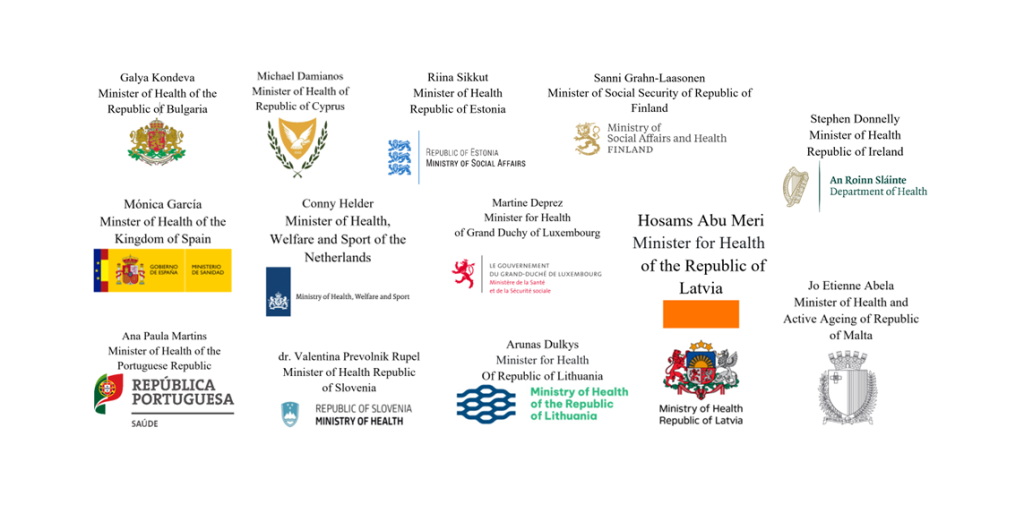
The Joint Letter, addressed to Stella Kyriakides, European Commissioner for Health and Food Safety, was signed by health ministers from Estonia, Latvia, Lithuania, Finland, Bulgaria, Slovenia, Cyprus, Ireland, Luxembourg, Malta, the Netherlands, Portugal, and Spain.
According to the 2020 Estonian adult population health behaviour survey, 3.8% of the adult population were regular users of electronic cigarettes, a figure that rose to 10.4% by 2022. Alarmingly, there is a significant growth trend among young women, with the percentage of daily e-cigarette users increasing to 11.5% over a few years. Additionally, the use of nicotine pouches has also increased among younger age groups, with 20% of men aged 16-24 being regular users in 2022.

