
“I know that, compared to the scale of your needs, this is only a drop in the ocean—thousands of Ukrainian men, women, and children have lost limbs or more in this war and require prosthetics,” Joller said. From 2022 to 2024, 41 Ukrainian fighters have received prostheses and rehabilitation at the East Tallinn Central Hospital’s rehabilitation centre, and the programme will continue this autumn.
Estonia remains committed to supporting the rebuilding of Ukraine’s health and social systems. For example, the Estonian Centre for International Development is currently helping design child-friendly bomb shelters in orphanages in Zhytomyr and Korosten, while Tallinn Health Care College recently completed a training programme for Ukrainian refugee nurses, among other initiatives.
“This is not one-sided aid, but rather mutually beneficial and essential cooperation,” Joller emphasised during the meeting. “There is so much we can learn from Ukraine’s harrowing experience—from crisis preparedness for vulnerable groups to how hospitals and doctors cope with total power outages.”
According to Joller, Ukraine has recognised something crucial—the need to systematically and consistently support people’s mental health in times of crisis. “During my visits, I saw how mental health support has been integrated everywhere—from children to the elderly, from community centres to hospitals, and not forgetting healthcare workers. This is a practice we should take as an example,” she added.
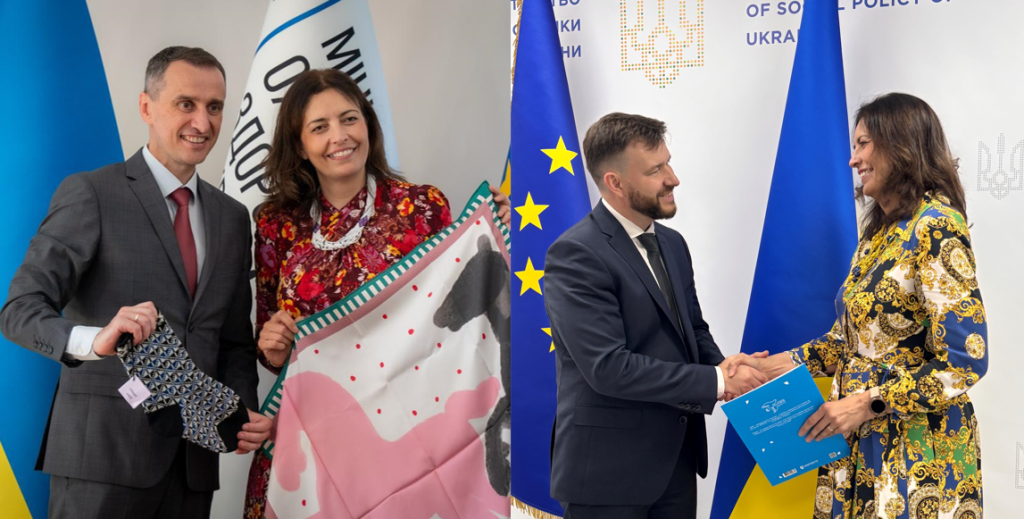
Ukraine’s newly appointed Minister of Social Policy, Denys Uliutin, highlighted to the Estonian delegation the importance of visits from Estonian government members during such a brutal war, as a powerful demonstration of solidarity. Drawing on Estonian experience and support, Ukraine has established kindergartens and family homes for children orphaned by the war. Ukraine also aims to build a modern pension system and is interested in learning from Estonia’s approach. Estonia is also supporting Ukraine’s efforts to harmonise its IT infrastructure and data governance with European Union regulations.
Joller stressed that Estonia remains steadfastly committed to Ukraine’s victory in this unjust war, in which Russia has attacked more than 2,500 healthcare facilities. “Thank you for your courageous fight—for yourselves and for all of democratic Europe,” she added.
Minister Karmen Joller and the Estonian delegation visited Ukraine from 4–6 August. In addition to meetings with health and social policy officials, they visited the WHO office in Ukraine, Kyiv’s trauma and orthopaedics centre, the Ohmatdyt children’s hospital (damaged by a missile strike and under renovation), first aid and family centres and ambulance services in Bucha, a military hospital and rescue centre in Irpin, and a rehabilitation centre for people with disabilities in Liutizh. The delegation also visited Bionics Group Ukraine, a manufacturer of bionic prosthetics, and the Titan rehabilitation centre, where military veterans who have lost limbs are prepared for prostheses.
The minister also laid a candle and flowers at the Butcha memorial to victims of Russian occupation and visited a chapel commemorating children killed in the war.

