
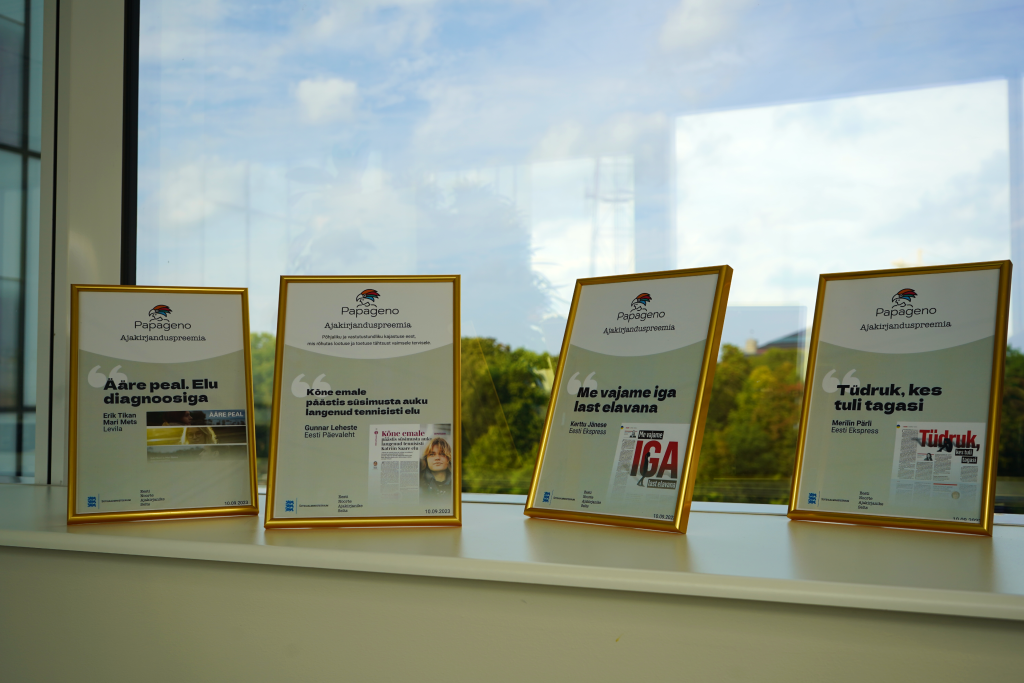
According to Brita-Maria Alas, representative of the Estonian Young Journalists Association, it's challenging to write a story that's both readable and interesting while maintaining ethical standards on such a delicate topic. „Gunnar Leheste's story is a perfect example of how responsible and in-depth reporting can be of help and inspiration to many. We congratulate all award recipients and those recognized.“
The Papageno Media Award was established to recognize journalists who have contributed to suicide prevention and the spread of the Papageno effect in the Estonian media landscape. The award name comes from Mozart's opera "The Magic Flute," where the protagonist, Papageno, contemplating taking his own life, eventually finds help and support, reminding everyone that there's always hope and opportunities in life. Read more about the Papageno Media Award in Estonia, evaluation criteria, and responsible reporting on suicide HERE.
What is the Papageno effect?
In Mozart's opera "The Magic Flute," the protagonist Papageno contemplates taking his own life because he fears he has lost his beloved. However, before Papageno acts on his intention, three spirits appear, reminding him of his magical chimes and helping him find his beloved Papagena again. These three spirits show him that there are other ways to cope with mental and emotional suffering besides taking one's own life.
Inspired by the story of the main character in "The Magic Flute," the Papageno effect is named after him and is an important tendency in the field of suicide prevention. Studies have found that sharing stories of people who have found alternative positive solutions to crises instead of taking their own lives has a positive impact on others, particularly those going through difficult situations. These stories offer hope and prove that no matter how difficult the circumstances may be, help is always available. This is what is known as the Papageno effect.
Help is available for those struggling with suicidal thoughts in Estonia:
- Child Helpline: 116111 (24/7)
- Victim Support Crisis Helpline: 116006 (24/7)
- Soul Care Helpline: 116123 (10-24)
—–
- Psychiatric Clinic Emergency Room in Tallinn: 6172 550 (24/7)
- Psychiatric Clinic Emergency Room in Tartu: 731 8764 (24/7)
- Psychiatric Department Emergency Room in Pärnu: 516 0379 (24/7)
- Psychiatric Clinic Emergency Room in Viljandi: 435 4255 (24/7)
- Emergency Medicine Department in Ahtme: 331 1074 (24/7)
- Emergency Medicine Department in Narva: 357 1795 (24/7)
--
Emergency: 112 (24/7)

